


- March 10, 2026
- Posted by: EWGFX
- Category: Uncategorized
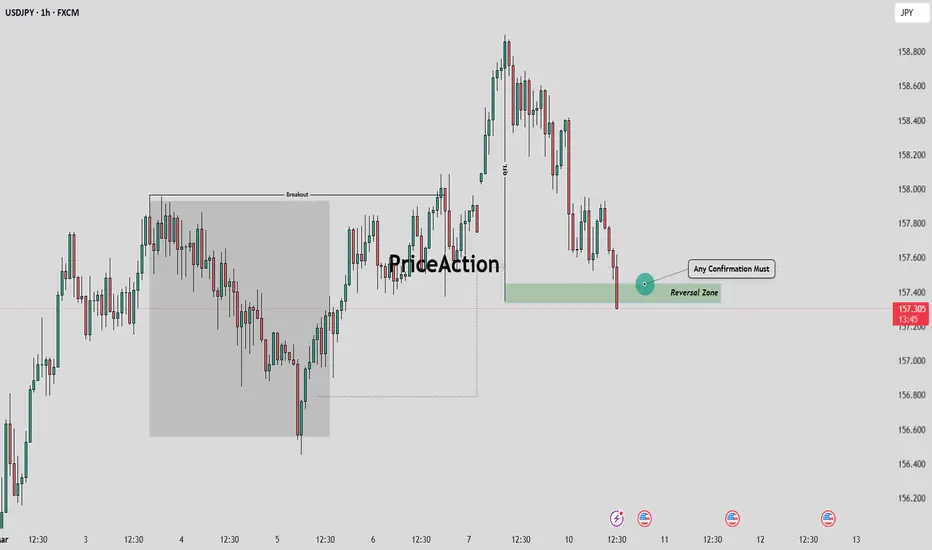
USDJPY Retesting Breakout Structure – Reversal from Demand Zone
This chart highlights a classic breakout and retest structure on the 1-hour timeframe, where price initially consolidated inside a defined range before creating a bullish breakout and a strong impulsive move. The current price action now shows the market retracing back toward a key demand zone, which could potentially act as a reversal area if buyers step in again.
Market Consolidation Phase
On the left side of the chart, price was moving inside a sideways consolidation range, marked by the grey box. During this phase, the market formed multiple rejections at both the upper and lower boundaries, indicating a temporary balance between buyers and sellers.
This type of structure usually represents liquidity accumulation, where the market builds orders before a major directional move. Traders often watch these ranges closely because once price breaks out, the move can become very strong due to stop hunts and breakout traders entering the market.
Breakout and Bullish Expansion
After spending significant time inside the range, USDJPY eventually broke above the resistance level, confirming a bullish breakout. This breakout triggered a strong upward impulse where price rapidly created higher highs and higher lows, showing clear bullish momentum.
The breakout level became an important market structure point, as it marked the transition from consolidation to expansion. Typically, such levels later act as support zones when the market retraces.
Following the breakout, the market continued its bullish move and reached a local high near the 158.80 area, where the bullish momentum began to slow down. This region likely acted as a liquidity zone, where profit-taking and sell orders started to appear.
Shift in Momentum
After the strong upward movement, price began forming lower highs and deeper pullbacks, which is often the first signal that bullish momentum is weakening. This does not immediately confirm a bearish trend, but it indicates that the market is entering a corrective phase.
Corrections are normal in trending markets and are often necessary before the next major move occurs.
Retest of the Demand / Reversal Zone
Currently, price is moving downward toward a key demand zone around the 157.30 region, marked as the Reversal Zone on the chart.
This area is technically important because:
- It aligns with the previous breakout structure
- It sits near a historical support level
- It represents a zone where buyers previously gained control of the market
- It could contain unfilled institutional orders
Markets often revisit these zones to test whether buyers are still willing to defend the level.
Bullish Scenario
If price enters the demand zone and forms strong bullish confirmation, such as rejection wicks, bullish engulfing candles, or a break of minor resistance on lower timeframes, this could signal that buyers are stepping back into the market.
In this scenario, USDJPY may attempt a bullish continuation toward the following levels:
- 157.90 – 158.00 (near-term resistance)
- 158.40 – 158.60 (mid-range resistance)
- 158.80 previous swing high
A successful bounce from this zone would confirm that the breakout structure remains valid and the broader bullish trend may continue.
Bearish Scenario
However, if price breaks below the demand zone with strong momentum, it would invalidate the bullish reversal idea.
A confirmed breakdown could trigger further downside movement toward:
- 157.00 psychological level
- 156.80 – 156.60 previous structure support
This would suggest that the market is shifting toward a deeper correction phase.
Key Trading Insight
This setup represents a classic breakout → impulse → retracement → decision zone structure. Instead of entering prematurely, traders should wait for clear confirmation signals inside the demand zone before considering any trade setups.
Patience at key levels often provides better risk management and higher probability trading opportunities.