


- April 24, 2026
- Posted by: EWGFX
- Category: news
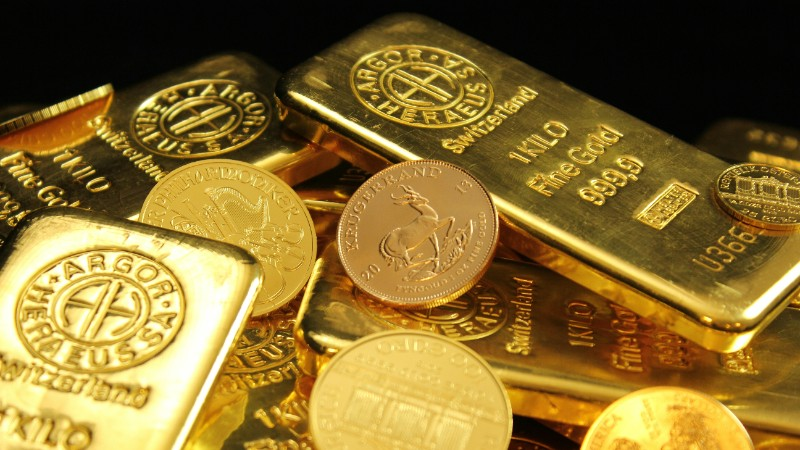
Volatility has defined global markets in 2026. The protracted conflict between the US and Iran, which has resulted in massive disruptions to oil and fertiliser supply, continues to create shockwaves across the energy, shipping, aviation, and agriculture sectors. Meanwhile, unrest in the Middle East, Eastern Europe, and North-East Africa rolls on unabated.
In times like these it is the instinct of investors to build resilience in their portfolios by diversifying with cash-like instruments, such as bonds, alternatives, and — in particular — gold. Indeed, precious metals are seen as a safe-haven to hedge against economic uncertainty, currency devaluation, and inflation — all of which plague today’s markets. Thanks to gold’s low correlation with the stock market, it offers a tangible store of value and a portfolio buffer.
In this instalment of Finextra’s Explainer series, we explore why gold has become an investment preference for 2026, and how fintech trading platforms are stepping in to meet demand.
No ore-dinary asset
Already in 2026, the conditions that usually result in increasing demand for gold have been met. Political and military unrest have befallen the Americas, Europe, Africa, and the Middle East; currencies – as a result of Trump-induced trade wars — have been devalued; and inflation casts a shadow over Europe and the US.
These factors have caused a succession of shockwaves to ripple across the stock market, which, since the outset of 2026 — when the US administration captured Venezuelan leader, Nicolás Maduro, on 6th January — have swung back and forth from a state of contraction to recovery.
As a tangible store of value, distinct from the abstract forces of the stock market, gold is a popular means for investors to diversify risk. This principle has recently been reflected in an HSBC survey, the Affluent Investor Snapshot, which polled 10,000 affluent and high-net-worth individuals in January 2026, across 10 markets, capturing portfolio positioning and future investment intentions.
The survey found that while investors are sticking with stocks for growth, they are increasingly building resilience through cash-like instruments, like bonds, alternatives, and gold, to help mitigate market volatility. The approach to diversification seems to be growing in sophistication, HSBC argues, with preferences diverging by generation and market:
“Younger investors surveyed said they tend to favour gold and alternatives as diversifiers, whereas older investors placed greater emphasis on liquidity and income alongside growth strategies.”
According to the HSBC poll, 52% of respondents plan to ramp up investments in gold, though interest among Baby Boomers (43%) is lower than among Gen Z, Millennials, and Gen X (averaging 54%). Regionally, gold is more popular in Asia and the Middle East (62%) than in the UK, US, and Mexico (averaging 38%).
The portfolio anchor, however, remains stocks, with 66% of respondents intending to hold equities for growth in 2026 across generations globally.
AU revoir to manual trades
As demand for gold rises, access to it is, in turn, opening up. Prior to the advent of digital trading platforms, and after the closure of the gold standard, gold trading was predominantly conducted over phone, telex, and fax. Dealers and brokers would receive calls from clients and contact other banks or brokers to find the best price — a method far less efficient than the instant, real-time digital services users expect today.
One of the fintechs riding on the acute demand for gold is Goldwise, a UK firm founded by former Royal Mint executives, which recently launched a trading platform enabling investors to buy and trade precious metals via mobile app. The platform provides a means for savers and investors to buy, manage and sell fractional physical gold, silver, platinum and palladium.
On top of the consumer-led mobile experience, Goldwise has launched a precious-metals-as-a-service infrastructure solution, which enables wealth platforms and financial institutions to embed physical precious metals trading. This dual-distribution model makes Goldwise a core infrastructure provider for the wider wealth ecosystem, as well as a consumer fintech.
The founders of Goldwise, Jatin Patel and Gareth Tucker, who previously led the transformation and scaling of The Royal Mint’s precious metals division, have said they saw a gap in the market, with rising demand for physical precious metals, alongside customer frustration around outdated, bullion dealer-led models and the lack of an offering on wealth platforms.
Goldwise is among a number of UK-based digital trading platforms capitalising on today’s gold rush, along with BullionVault, IG, and the Royal Mint’s DigiGold.
A karat and stick approach
Investor appetite for gold reflects more than a short-term reaction to macroeconomic turbulence. It underscores a broader shift toward stability, diversification, and trust in tangible value amidst uncertain times. With investors navigating inflation concerns, geopolitical risk, and fluctuating stocks, gold once again reasserts itself as a strategic hedge. The rise of digital trading platforms is only broadening access to precious metals, serving to lower barriers and reshape how investors of all kinds engage.
Together, these trends point to a future in which gold remains a timeless safeguard and an increasingly accessible component of contemporary investment portfolios.